


Cambodia is a Southeast Asian country situated in the Indochina Peninsula. One of the fastest-growing Asian economies, it enjoys an enviable reputation among tourists due to its plentiful offerings. Pristine beaches, unique historical sites, vibrant cultural attractions, and serene and scenic wonders, the country has it all. It is also home to the imposing temple complex, Angkor Wat, a UNESCO heritage site. This complex is the largest religious monument in the world and presents visitors with rich insights into the country’s history. The country’s capital city, Phnom Penh, with its range of exciting activities and sites, has a unique appeal and attracts many tourists. So, go ahead and plan a vacation to this Southeast Asian gem. Read on to know more about the top things Cambodia is famous for.
1. Apsaras dance performance

With its origins dating back to the seventh century, Apsara Dance stems from the country’s religious mythology. According to ancient Hindu mythology, Apsaras were celestial dancers or mesmerizing female creatures from heaven sent down to entertain the gods and kings through dance. This dance is characterised by slow-paced movements with a focus on hand gestures. The dancers, or ‘Apsaras’ in common parlance, wear elaborate costumes and accessories. A complex dance form, it usually takes years to master. Any trip to Cambodia is surely incomplete without experiencing this traditional dance.
2. Koh Kong Conservation Corridor

Koh Kong Conservation Corridor, the hub of Cambodia’s ecotourism, is an expansive stretch of mesmerizing natural beauty and stunning biodiversity. This corridor runs across both sides of NH 48 from Koh Kong to the Gulf of Kompong Som. At the southern end of the corridor, one will find Botum Sakor National Park, one of Cambodia’s largest national parks. Featuring rich biodiversity, the park is home to wildlife such as Asian elephants, pangolins, sun bears, hog deer, fishing cats, and slow loris. Aside from the park, the area also incorporates a part of the historic Cardamom Mountains. Another natural attraction in the conservation corridor is Tatai River, which passes through Cardamom Mountains. This place is best for nature lovers.
3. Mekong river Irrawaddy dolphins

Mekong River is among the longest rivers in Asia. Running across six countries, the river is known for its stunningly diverse ecosystem. The river, commonly regarded as the “world’s most productive river” supports a plethora of aquatic flora and fauna. One of these is the Irrawaddy dolphin, which is characterized by their round head and short beaks that are similar to that of a beluga. The dolphins Inhabit a 118-mi (190-km) stretch of the river from Cambodia to Lao PDR. Tourists flock to the river to catch a glimpse of these unique creatures. However, owing to unchecked human activities, these species have become critically endangered. In fact, Mekong River is one of the last few habitats of Irrawaddy dolphins.
4. Angkor Wat


One of the biggest religious structures by land area in the world, Angkor Wat is an integral part of Cambodia and its culture. It is so significant that this temple complex appears in the national flag of Cambodia. Built in the 12th century, the complex, comprising multiple buildings, was originally dedicated to a Hindu god. In the latter half of the 13th century, however, it was converted to a Buddhist temple and remains so today. Intricately built, the temple displays Khmer architecture at its best. A UNESCO world heritage site, this grand temple complex draws in thousands of tourists every year.
Tip from tour guide


To enjoy a lovely sunrise view, make sure to visit the temple early in the morning. The sky, with its shades of orange and blue, looks heavenly at this time. Also, you will get a chance to witness the temple buildings outlined in a gorgeous palette of soothing hues.
Apart from the gorgeous sunrises, Angkor Wat is also a great place to witness the majestic moonrise on top of the towering temples. The reflection of the moon in the pond in front of the temples creates an even more magical atmosphere. The moonrise on Equinox Day is particularly special in its glory.


Tip from tour guide
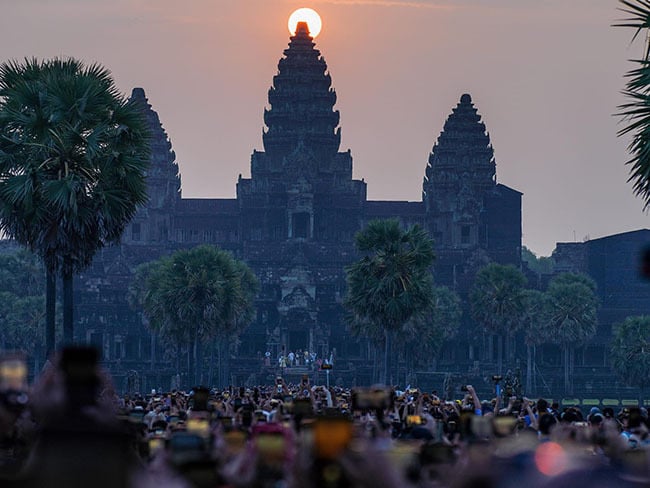 Angkor Wat is undoubtedly the crown jewel of Cambodia, drawing millions of visitors each year to witness its grandeur. One of the most popular experiences at this iconic temple complex is watching the sunrise over its ancient spires. But with the early wake-up call and the crowds that gather, you might wonder: Is it really worth it? Here’s why catching the sunrise at Angkor Wat is an experience you shouldn't miss: 1. Unforgettable Visual Spectacle: The sight of the sun rising behind Angkor Wat’s silhouette is nothing short of magical. As the first rays of sunlight gradually illuminate the sky, the temple's reflection in the lotus-filled pond creates a picture-perfect moment. The shifting colors of the sky—from deep purples and blues to warm oranges and pinks—combined with the majestic outline of the temple, make for a breathtaking scene that’s well worth the early start. 2. Beat the Heat: Angkor Wat and the surrounding temples can become incredibly hot as the day progresses, especially during the peak tourist season. Visiting at sunrise allows you to explore the temple in the cool, early morning hours, making your experience more comfortable and enjoyable. The cooler temperature also means you can walk around the extensive grounds without the fatigue that often accompanies the midday heat. 3. Capture Iconic Photos: If photography is one of your passions, the sunrise at Angkor Wat offers a golden opportunity to capture stunning images. The play of light and shadow, combined with the unique architecture of the temple, creates ideal conditions for photography. Whether you're a professional photographer or just love snapping pictures for your memories, the sunrise offers some of the most iconic shots you can get at Angkor Wat. 4. Experience the Tranquility: While Angkor Wat is one of the most visited sites in the world, there's a special tranquility that comes with witnessing it at dawn. The early morning stillness, before the throngs of tourists arrive, allows you to soak in the serenity and spirituality of the place. It’s a time when you can truly appreciate the temple's grandeur and reflect on its historical and cultural significance. 5. A Unique Perspective: Seeing Angkor Wat in the early morning light offers a different perspective compared to visiting later in the day. The temple complex, shrouded in the morning mist and gradually revealed by the rising sun, takes on an almost mystical quality. It’s a moment that connects you with the ancient past, offering a deeper appreciation for the skill and devotion that went into creating this masterpiece. Is It Worth the Crowds? One of the main concerns about visiting Angkor Wat at sunrise is the crowd. It's true that many tourists gather for this spectacle, but the size of the temple complex means there's enough space for everyone to find a good vantage point. If you're looking for a quieter experience, consider exploring other temples in the early morning after catching the sunrise, as most visitors will stay around Angkor Wat for a while. To sum up, yes, watching the sunrise at Angkor Wat is a must. While it requires an early start and a bit of patience with the crowds, the memories and photos you'll take away from this experience will undoubtedly be worth it. Whether you're a history enthusiast, a photography lover, or simply someone who appreciates stunning landscapes, Angkor Wat at sunrise is an unforgettable experience.

Tip from Content Creator
 One of the best highlights of Cambodia is Angkor Wat. I have been to a fair share of temples around the world, but none quite compare to the beautiful and unique Angkor Wat. This had always been on my list and it did not disappoint! Don't be afraid to branch out and visit the other temples nearby too, such as Ta Prohm (my favorite) and Bayon Temple. The only thing that I would recommend is bringing a small towel. There was so much humidity in the air that I felt wet all day.


Book Tours : Angkor Wat Admission Ticket
5. Siem Reap


Siem Reap is an ideal place to experience the country’s rich culture. Home to Cambodia’s most important cultural attraction, Angkor Wat, the city draws in many tourists wanting to explore the temple complex. However, the city’s appeal extends far beyond Angkor temples. The city offers traditional Apsara dance shows, museums, cultural villages, shops, and rich French and Chinese-style architecture. No wonder it was ASEAN’s (Association of Southeast Asian nations) city of culture for 2021 to 2022. The best way to explore this city is by going on a two-day tour that allows you to watch the sunset and visit a floating village.
6. Tuk tuk

Besides visiting important cultural centers, one of the best ways to explore a historical, culturally rich country like Cambodia is to set out and explore the local surroundings, and what better way to do so than by hailing a tuk tuk? These ubiquitous two-wheeled carriages, pulled by a moto, are ideal for exploring the country. Be it visiting local markets, pagodas, or even important cities such as Phnom Penh, tuk tuks are an attractive option for intra-urban transport in Cambodia. Plus, it allows you to experience living like a local. So, do not forget to avail yourself a ride or two of these carriages and explore the exuberant surroundings.
7. Phnom Penh Royal Palace
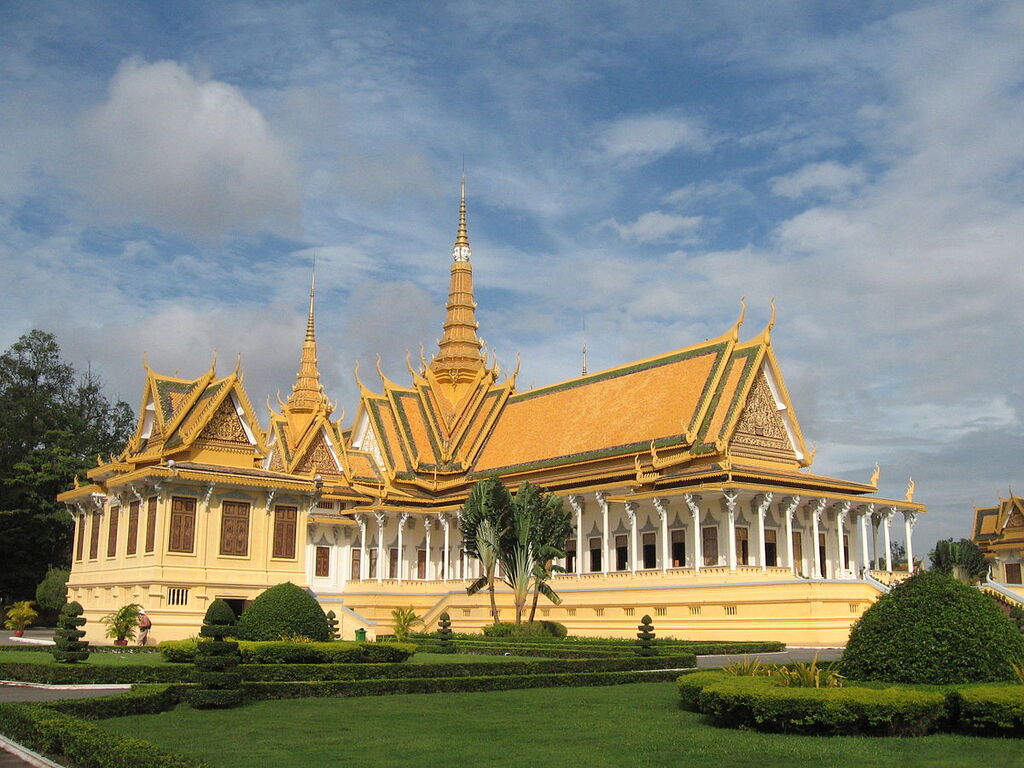
Phnom Penh Royal Palace is a historical building complex in Phnom Penh, the capital city of Cambodia, where the King of Cambodia resides. It was constructed in the years 1866 to 1870, along with the shifting of the capital city from Oudong to Phnom Penh. The area consists of four major compounds with Silver Pagoda on the Southern side, Khemarin Palace to the North, and Throne Hall in the central area. The Inner Court acts as the private sector. Tourists love visiting the gardens, which are open to the public, and Silver Pagoda.
Phnom Penh Royal Palace
Address: Samdach Sothearos Blvd (3), Phnom Penh, Cambodia
Opening hours: Sat - Thu: 8am - 10:30am, 2pm - 5pm; Fri: 8am - 10:30am, 2pm - 4:30pm
Price: 6.50 USD - 10 USD (26,413 KHR - 40,335 KHR)
8. Tonle Sap


Tonle Sap, a reference to the freshwater Tonle Sap Lake and its associated river, Tonle Sap River, is an important part of Cambodia’s natural ecosystem. The 75-mi (120-km) long river connects the seasonally inundated Tonle Sap Lake with the mighty Mekong River. Tonle Sap River supports a wide array of biodiversity, and it is unique in the sense that it changes its direction of flow according to the season. During the monsoons, the mighty Mekong River forces water through the Tonle Sap River upstream to the lake. In the drier season, however, the flow is reversed and the lake is significantly drained into Mekong.
9. Tuol Sleng Genocide Museum

This museum, situated in Phnom Penh, chronicles the infamous period of Cambodian Genocide. The genocide pertains to the systemic culling of Cambodians by Khmer Rouge, an autocratic regime that ruled during the 1970s. The site of the museum was previously a secondary school that was converted to a security prison by the Khmer Rouge. Its goal is to showcase the atrocities during a terrible period of Cambodian history and encourage its visitors to always choose peace.
Tuol Sleng Genocide Museum
Address: St.113, Boeung Keng Kang III, Boeung Keng Kang Phnom Penh, Cambodia
Website: Teol Sleng Genocide Museum
Opening hours: 8am - 5pm (daily)
Price: 3 USD (12,100 KHR) onwards
10. Khmer Cuisine


A mention of any country’s cultural richness is incomplete without a mention of its traditional cuisine. Cambodia’s cuisine, or more commonly known as Khmer cuisine, is characterized by its subtle blend of spices and flavors. The mainstay of Khmer cuisine is prahok, a fermented paste made from trey riel (a small freshwater fish). Other popular dishes or flavors to try include fish amok, kuy teav (noodle soup), Khmer curry, or bai sach chrouk (pork and rice).
Book Tours : Siem Reap Khmer Cuisine Cooking Class
Have an unforgettable experience in this beautiful country
Cambodia, with its plethora of notable attractions, historical sites, and cultural experiences promises an unmatched experience for the visitors. While planning your visit, do not forget to check out the top things Cambodia is famous for and learn about the country while living like a local.
History
Get Trip101 in your inbox
Unsubscribe in one click. See our Privacy Policy for more information on how we use your data